


As the plane sped down the runway at the Gold Coast Airport, my trepidation turned into nerves. This was due in part to Tom’s choice of documentary the night before: Miracle Landing on the Hudson. I had conveniently planned this filming trip around the support work I do with Tom. This meant leaving an hour earlier on Tuesday morning with the raw reality of the plane crash documentary playing on repeat through my mind. I detected this was Tom’s sense of humour because when I got back the following weekend he asked, “How was your trip?” then chuckled when I told him I was a little jumpy on the departing flights, which could possibly have had something to do with the show we watched the night before I left.
In actual fact though, there was more to my nerves, if I am completely honest. It’s been two years and I’m a little rusty. These trips were so different back then. I needed to escape my life. This time the excitement wasn’t as straightforward. I have been asked to film and taking this opportunity will mean a couple of years of financial security.
This is music to my ears and a palette of colour for my eyes. Filming on-farm is not for the faint hearted. I haven’t been trained; I’m self-taught, but this gives me an untethered approach. A free spirit to catch the twinkle of fairy dust, those magical one-hit wonders that encapsulate the narration. This is the natural approach, and I love it. Candid responses. Swearing that I cut later. The spoken word unravels the confusion even if it doesn’t fully answer the question being asked. None of us are perfect, nor are my videos. This is what makes the Farming Revolution YouTube channel novel.
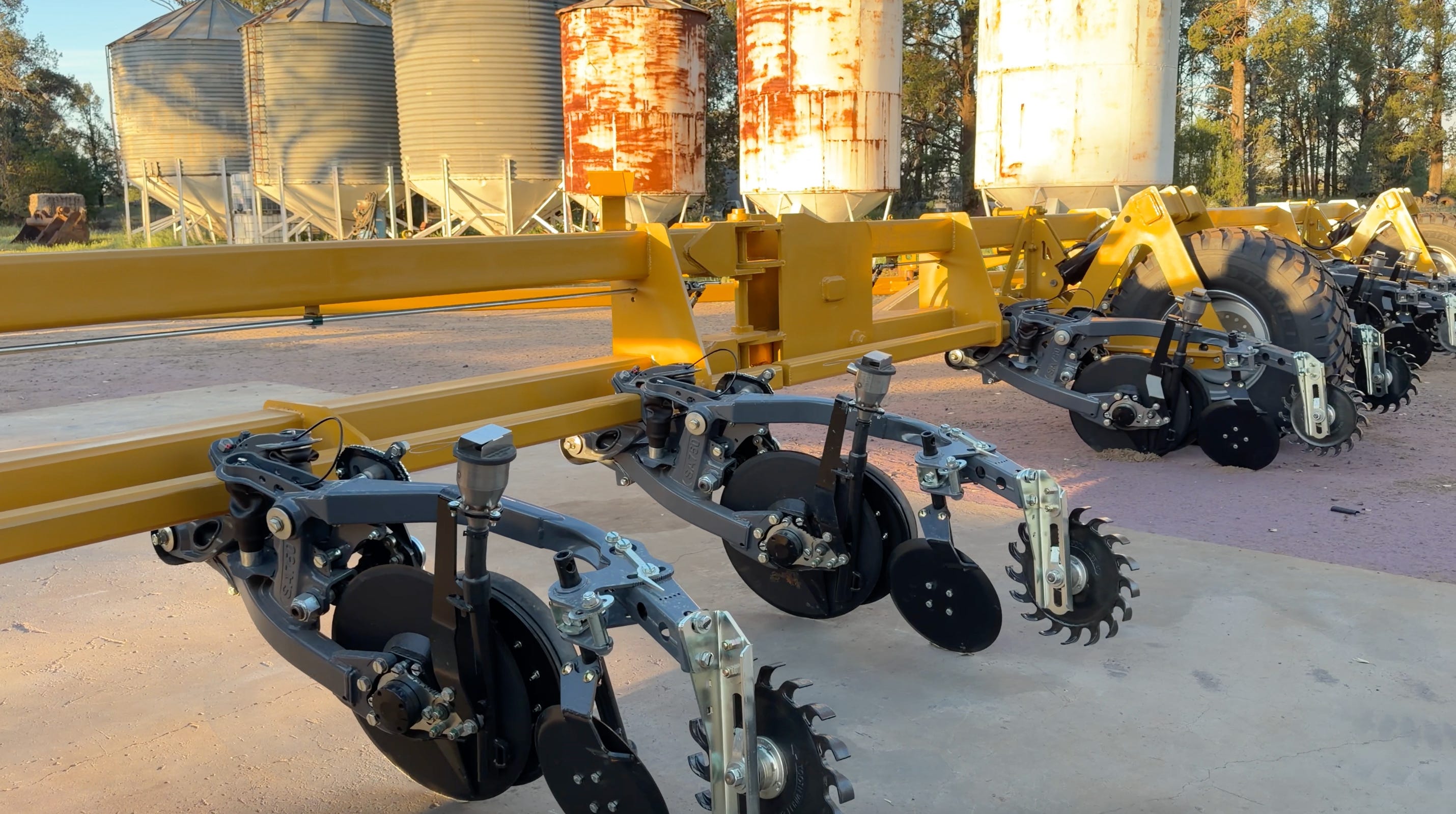
Having landed in Dubbo, last week’s Substack ricocheted around my already buzzing head. Martin was stood waiting for me in the arrivals hall and I gave him a big hug. We haven’t seen each other for a couple of years. As we got in the trusty Tojo, Martin mentioned that we had to go via a farm on the way back to Nyngan. His friend has built a 120-foot cotton planter by hand. I smiled; filming had started already.
Farmers are incredible. His mate’s engineering skills were impressive, I mean really impressive.
(Pause)
Disappointment hit the following day — It was a classic reality check.
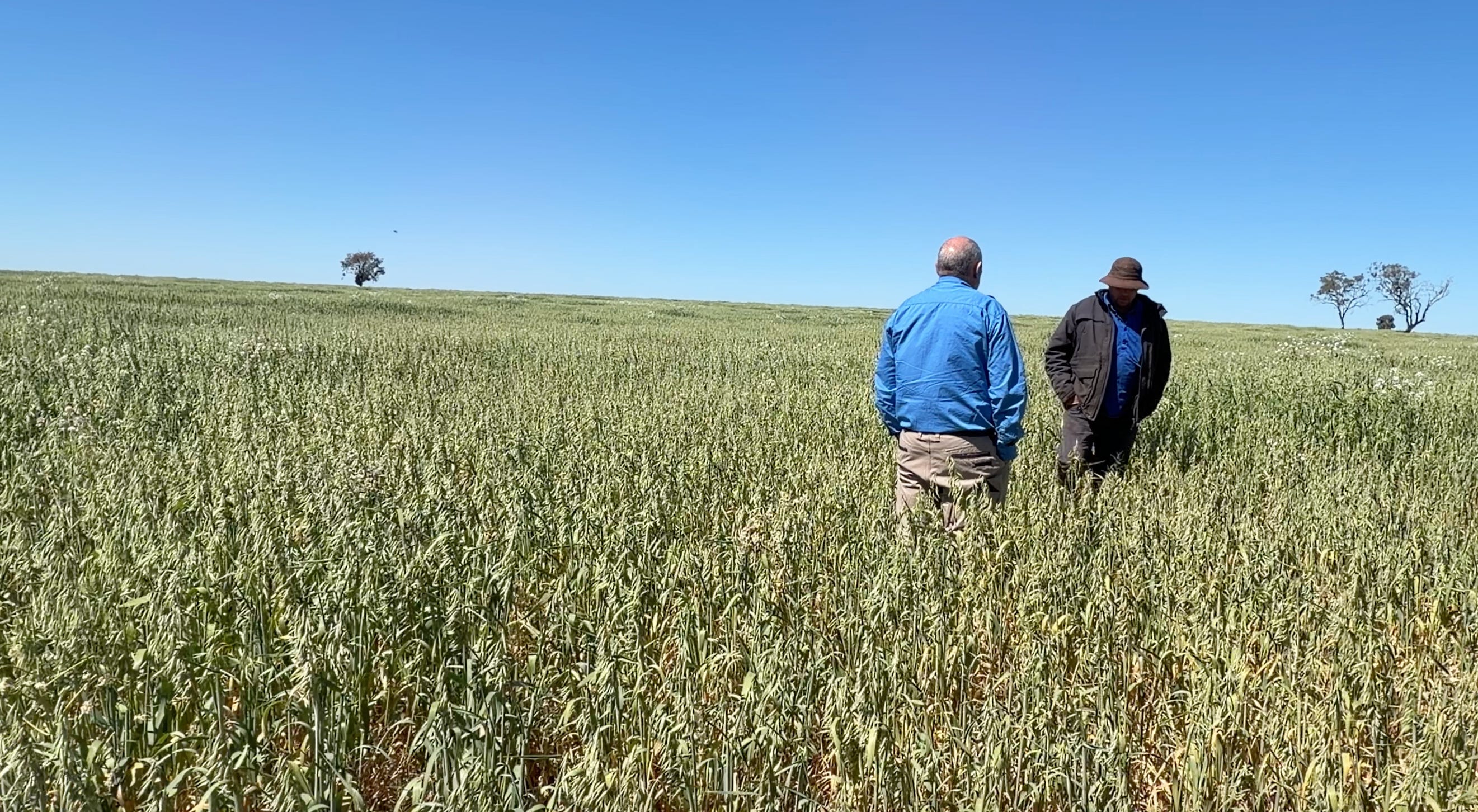
We visited Darren’s farm, an excellent opportunity for my cameras to catch the on-farm progress. The 3-way multi-species mix had been sown into a brand new piece of land. The risks of unknown country coupled with it being a below-average year for rainfall meant the 3-way mix was showing signs that the oats would dominate the harvest this season. There are two ways of looking at this and I like to be optimistic: thankfully the oats have done really well so nothing has been completely lost; however, the context this year did not favour the lupins and Daikon radish. Stacking the system hadn’t performed with its usual abundance. One out of three is still better than nothing. At least the oats have buffered the costs.
From one farm to the next and with the rubber rolling beneath us there were many regenerative conversations as I suspected. On one trip we changed minimal disturbance to appropriate disturbance. One of the five regenerative principles needed a tweak. The beautiful way in which regenerative thinking is fostered — influencing the language. Does it really represent what is being asked?
I have finally understood the WHOLE meaning of grazing management and carbon production. It is literally the difference between farming the easy — or hard way. If I am to explain grazing management it has occurred to me that ecosystem enhancement is more fluid. There is a need to be involved with grazing at specific times in the context of climate and environment. It’s not just livestock that needs to be played with when farming. Encroaching wildlife can detrimentally impact regeneration too. Nature wasn’t designed to be farmed but she adapts depending on how active or passive the management is. We have seen farming practices thrive when the farmer pulses with her ebbs and flows.
Active - push or take away. Passive - wait and allow.
Timing is everything.
The blueprint we are looking for moves. Like an orchestral conductor. Bring the heavy thunderous drums into the mood then overlay the strong beat with those light fluffy notes that tease. Entertain the idea of combining both. Encourage, don’t force and the harmonic frequencies grow. Push, pull then allow — that is the secret and not always in that order.
The farmer is our conductor, building the layers of music in the form of natural farming beauty. Mother Nature sings her melody. All we have to do is listen and translate into management.
Producing carbon is multifaceted. Do not misunderstand where the focus should be. Techniques to build and introduce compost go hand in hand with landscape function. Storage capacity and carbon link fingers and grip on tight. Too often we automatically reduce our thinking to water, rainfall and infiltration.
This is the really exciting part. This is the magic of compost.
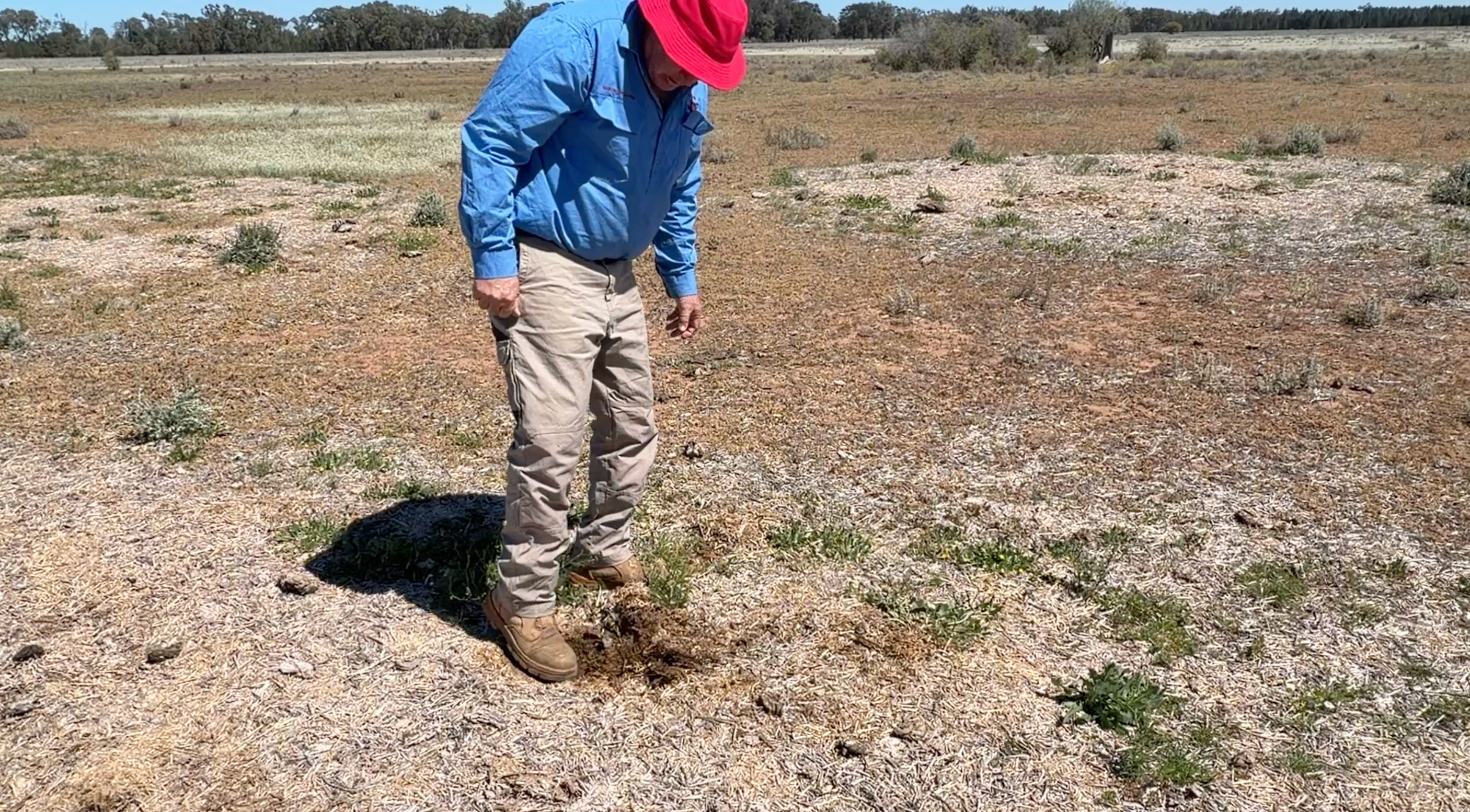
It was glaringly visible: the farm we visited was lacking organic matter and a balance of microbes and cycles. You could feel the dehydration. Carbon sounds the drum; it keeps the beat BUT do people fully understand what this means? Discombobulation — where the melody and harmony don’t match.
Mother Nature sings. She is noisy no matter what key her song is tuned to. Land that is dead is vibrating in the flat notes. The frequency is low and has a dry unbalanced feel to it.
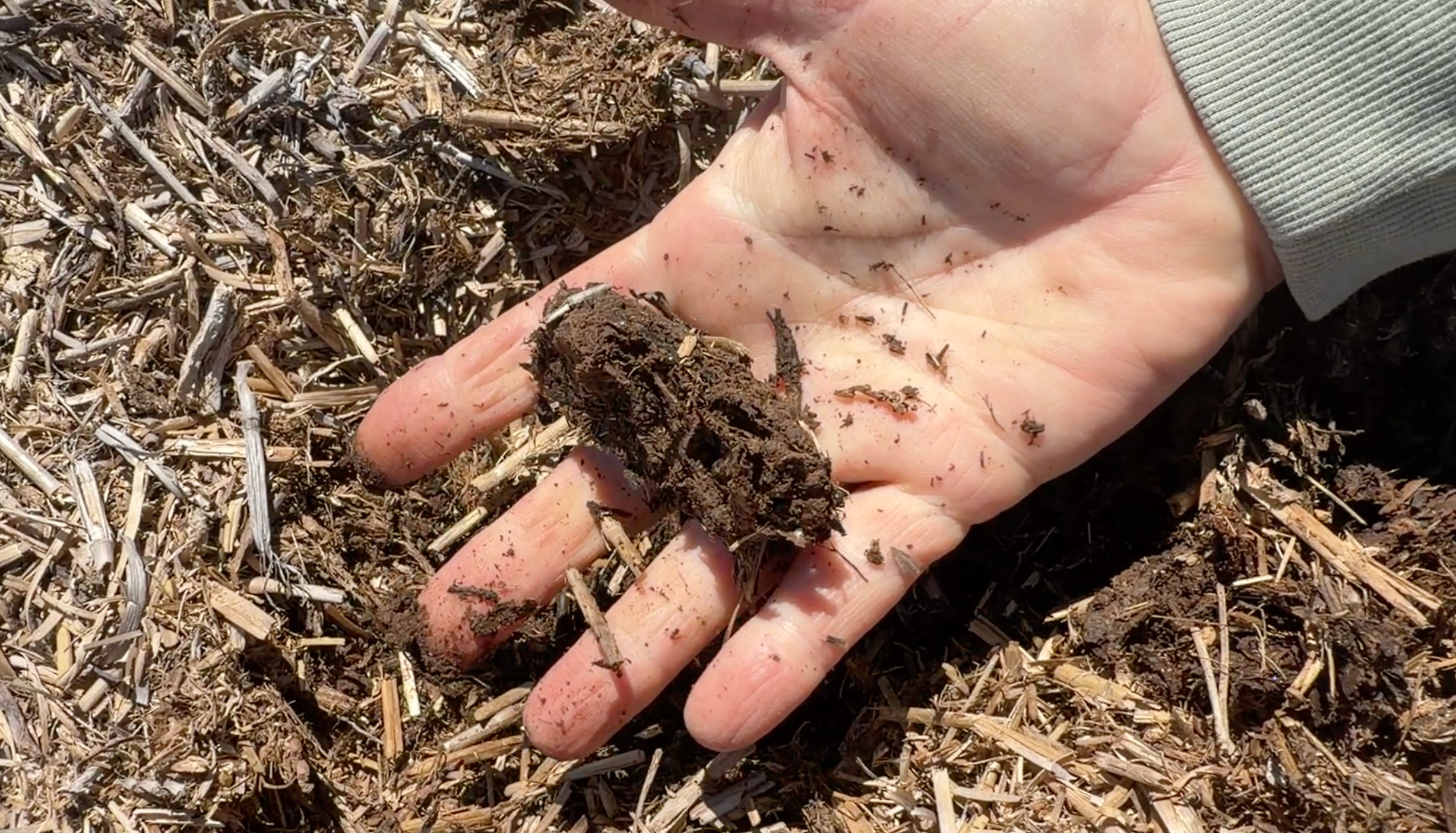
Interestingly the paddock with the worst bare sodic patches was where I saw the greatest improvements. This farmer was experimenting and I could see, smell and feel the start of a nutrient cycle as I dug into the imported organic matter. It wasn’t just the use of a round bale to graze. There were several different factors working together to produce water retention and compost. It was Mother Nature’s farming overture. The cascade of symphony opened up in front of my camera lens. Martin’s boot scraped back the residue of the hay and underneath was wet, not just moist — it glistened. The hay on top smelt active. Beautiful compost and around the edges grew weeds, bright green photosynthesising weeds.
It was the percussion that was missing…
The dung beetles.
What I saw was the potential of a complete cycle in the driest and most dysfunctional paddock I have ever stood in. Brittle country is unfamiliar to me, but I saw huge potential. In this case, actively placing round bales to feed the bare patches with the grazing as the by-product will focus the regeneration on producing organic matter. This allows the dung beetles to work their miracles. The cattle present themselves as the backing singers to improve natural productivity without breaking the bank (or stealing the mic).
The answer was so sweet I haven’t been able to stop thinking about it. Not because that is the only answer but because the answer is infinite. The blueprint stands strong, balanced and sits within its context and the five principles.
Active persuasion of grazing, combined with the passive natural building of the storage capacity. Grazing animals, dung beetles, compost and microbes all encouraging the feeding of the soil.
The compost blueprint — pure and simple.
Graze, digest, deliver and then, carry underground.
Post Script:
This has taken six weeks to perfect and I’m pleased I have been patient because this is the turning point. The moment I was scared of getting wrong. It has been the moment that I haven’t been able to afford nor have the time for… but now, I have orchestrated my life to be able to go on-farm and film.
What it took was patience and belief. I had to allow, not push and I had to find a job that suited my new life. One that could give me balance in the four arms of profit: money, health, time and my environment.
The overarching FULFILMENT is being attained, finally! (12th Substack if you can’t remember).